CHILLER SPACE
Product Specs Who it's for How to buy Request specs
CS1 · 150 kW Thermal Module · Flight-Proven Class

The thermal layer for orbital compute

Request CS1 specs → How buying works
01 / The problem

Every watt you compute in orbit, you must radiate

In vacuum there is no air to carry heat away — radiation is the only exit, and capacity scales with area and T⁴. A single GB300 NVL72-class rack dissipates ~140 kW; getting that heat from the die to deep space is the hardest layer of orbital compute.

Orbital compute
100+ kW racks
GPU racks push past 100 kW of continuous heat. The radiator, not the silicon, sets the ceiling on orbital data-center scale.
Power beaming
Conversion waste heat
Laser and optical power chains dump large waste heat at every conversion stage. Same wall, different payload.
High-power payloads
Radar · optical · comms
High-power apertures need the same rejection capacity with a simpler duty cycle — and no appetite to reinvent it.
02 / The product

CS1 — one part number, chip to space

Explore the module →

A standard, drop-in thermal module — cold plate, pumped PGW loop, deployable tube-and-fin radiator — that your team bolts on and ties into the coolant loop. Sized to a full 150 kW load and anchored on an NVIDIA GB300 NVL72-class rack.
CS1 · 150 kW thermal module
The thermal chain Chip → Space
01
TIM2 interface
Customer lid → our plate
02
Cold plate Our edge
Metal microchannel, per GPU / CPU / switch
03
Pumped loop
PGW · ~2 kg/s · 20 K rise
04
Redundant pump
N+1 · hot-swappable · the only moving part
05
Radiator
Up + down · tube-and-fin · knife-edge
06
Deep space
150 kW radiated, both faces
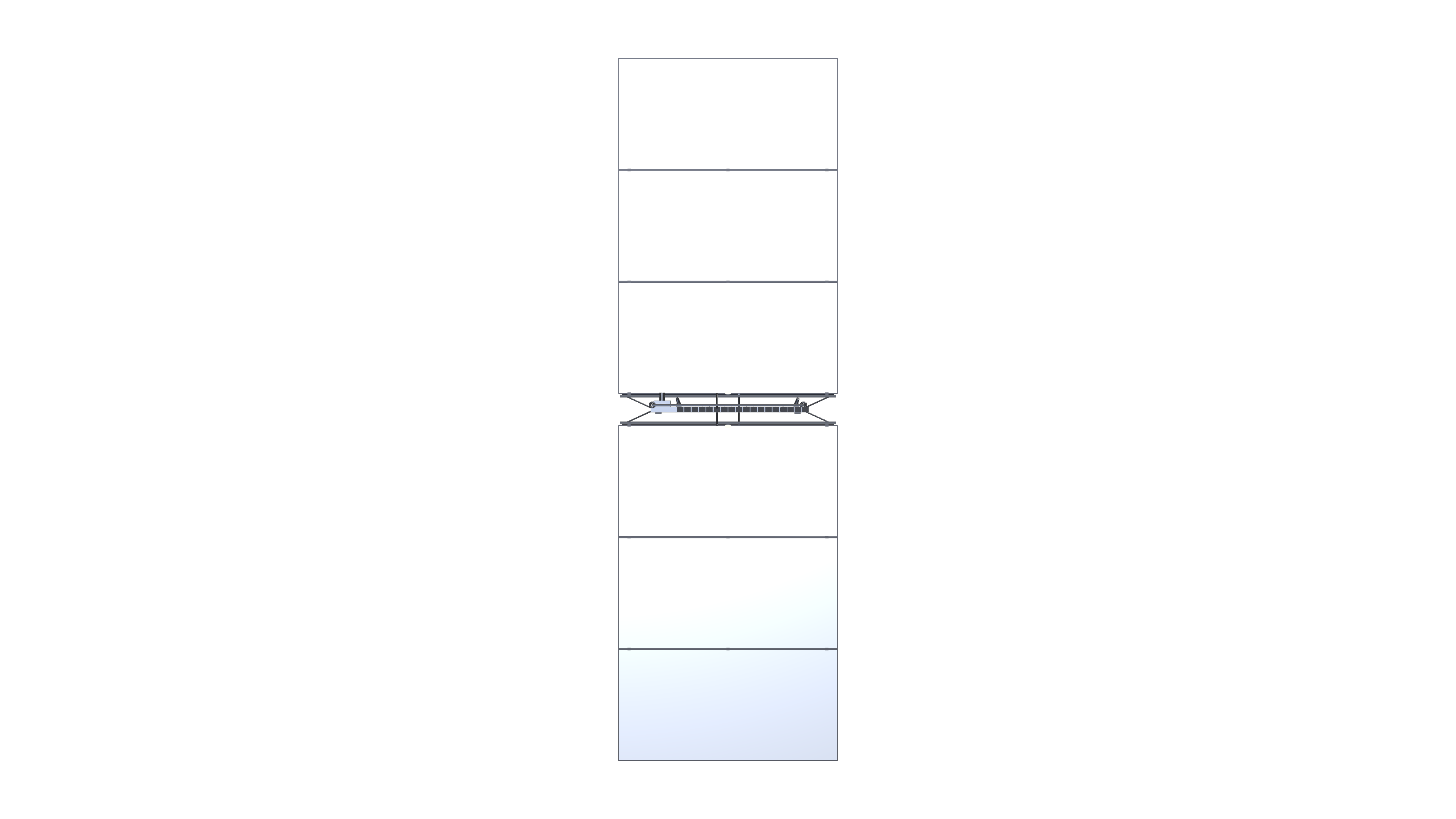
Fig. 01 — CS1 deployed elevation From CAD · knife-edge configuration
CS1 deployed elevation — front view; two-sided radiator up and down, central pump and tray spine, flying knife-edge to the sun
01
Radiator — up + down
Two-sided tube-and-fin · ~110 m²
02
Central spine + tray bus
Slide-in, serviceable
03
N+1 pump
Hot-swappable · only moving part
04
Cold plate + TIM2
Chip-side interface, 117 plates
05
Blind-mate quick-disconnects
Supply / return mains
06
Knife-edge to the sun
Faces see only deep space
A
Direct GPU mount
Cold plates mount straight onto the GPU packs. Tightest, highest-performance path.
B
Solar-wing back mount
Radiator rides the back of the solar-wing structure.
03 / The architecture bet

Proven-class. Done better.

We anchor on the closed, warm, pumped-liquid metal radiator — the architecture already validated on the newest generation of large orbital-compute platforms, proven at TRL 7. Not an experimental membrane. Not a moving belt. Our job is to deliver the same heat rejection as a drop-in block that beats the baseline on the numbers that matter.

01
Proven path
Reference-class system: 150 kW peak over ~110 m² of two-sided radiator at ~345 K, knife-edge to the sun, redundant loops, integrated micrometeoroid shielding.
02
Cold-plate first
Performance is won or lost at the chip interface. Metal microchannel plates today; an aggressive direct-die / liquid-metal option on the roadmap.
03
Drop-in
One part number, two mounts. You bolt it on and tie into the coolant loop — thermal stops being your critical path.
04
Built for the failure mode
The pump is the only moving part and the #1 failure mode — so it's N+1 redundant and hot-swappable by design.
04 / Headline specs

CS1 · 150 kW class

Full specifications →
150 kW
Heat rejection
~110 m²
Radiator area · two-sided
PGW
Loop · ~2 kg/s · 20 K rise
N+1
Pumping · hot-swappable
TRL 7
Heritage · architecture family
05 / Who it's for

Built for the teams carrying the heat

Buyer 01
Orbital data-center builders
You're rejecting 100+ kW of compute heat per rack. Integrate a proven thermal layer instead of standing one up in-house — and keep your team on the data center.
Request CS1 specs →
Buyer 02
Satellite bus & integrators
Your bus carries compute or high-power payloads. Outsource the thermal layer as one part number with a clean interface — brackets and scope settled per customer.
Discuss integration →
Buyer 03
Space solar & power beaming
Laser and optical conversion chains dump large waste heat — and your customers are already paying today. CS1 rejects it with flight-heritage-class hardware.
Request CS1 specs →
Buyer 04
High-power payloads
High-power radar, optical, and comms payloads need the same heat rejection with a simpler duty cycle. Same module, sized to your load.
Talk to us →
Standing up your own thermal capability? We also offer thermal analysis and engineering-as-a-service for integrators — a fast way to start working together.
Start a services conversation →
06 / Path to purchase

From first call to purchase order

Step 01
Requirements
Tell us your heat load, orbit, envelope, and schedule. We respond within two business days.
Step 02
Spec share
You get the detailed CS1 data sheet — sizing, interfaces, fluid loop, and mount options.
Step 03
ICD & integration review
Interface control document and integration review with your engineers, under NDA.
Step 04
LOI / PO
Submit structured intent — a letter of intent or purchase order request.
Start with specs Submit LOI / PO intent
CS1 · 150 kW · Two mounts
Stop building thermal. Start bolting it on.
Request CS1 specs Talk to us
Chiller Space
The plug-and-play thermal layer for high-power spacecraft.
Forward-looking statements. This site describes products in active development. Performance figures reflect a flight-proven architecture class and current engineering targets; specifications and timelines are subject to change. Nothing on this site constitutes an offer or quotation. Technical documentation beyond this site is shared with qualified parties only, subject to applicable export-control regulations.
© 2026 Chiller Space